

There have been countless examples of the story of access to education under segregation in the American South being recounted from the perspective of a complete lack thereof. Still, one significant structural change that took place in complete silence proved that determination could indeed make up for what the system was unwilling to offer. At the beginning of the 20th century, children of African American descent across all southern states were made to attend their classes either in improvised facilities, in churches, or even outdoors due to an unwillingness of their respective local governments to provide funds for building proper classrooms. Enter Julius Rosenwald, a rich businessman and president of Sears, Roebuck and Company.In collaboration with the visionary educator Booker T. Washington and Tuskegee Institute, Rosenwald embarked on an ambitious mission that led to the building of over 5,000 schoolhouses, teacher residences, and shops for vocational education in fifteen states. It was one of the most ambitious missions ever accomplished, but what made it successful was the fact that it was designed as a collaborative venture instead of a charity mission. The necessary funds had to match donations from the locals, who had very few resources at their disposal; however, they managed to contribute land, raw material, and even their labour.Through this process of reaching families at the point of the greatest injustice, the building of schools ensured that the newly constructed schools were literally and symbolically monuments of community perseverance. These monuments provided the physical location that allowed educational pride to be established, showing that grassroots activism could build a foundation of literacy and self-respect despite the oppression of Jim Crow.How community mobilisation outmanoeuvred systemic disinvestmentThe driving force behind this monumental effort was a careful funding plan devised to bring private donors into cooperation with the public school districts. As explained by historical data from The Rosenwald Schools: Progressive Era Philanthropy in the Segregated South, an independent fund established in 1917 called for local school boards and African American communities to match the grants provided. This approach forced accountability on the part of the white authorities responsible for educating African American children, who had previously ignored their responsibilities, while also establishing strong community commitment to the cause.Black families held fish fries, organised bake sales, and gave their own labour as a matching contribution to meet the strict financial benchmarks. The architecture itself was a massive leap forward; the blueprints, which were initially drafted by Black architects at the Tuskegee Institute, featured oversized windows, specific orientation to maximise natural sunlight, and clean, modular floor plans.
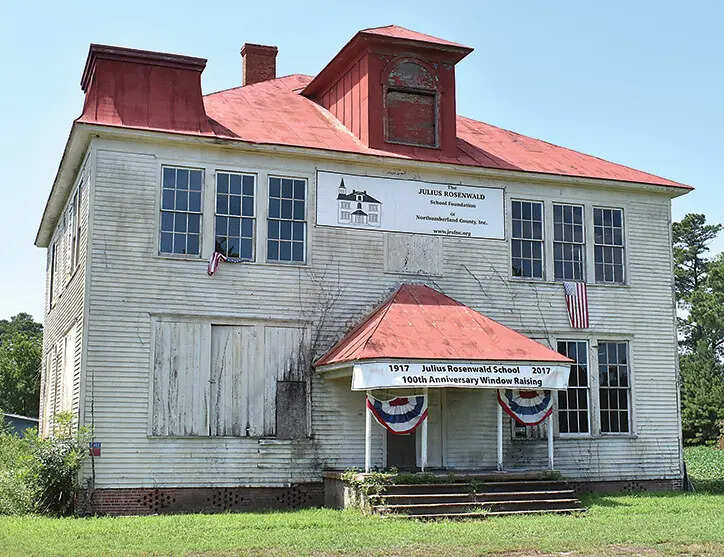
These schools became community hubs, fostering literacy and self-respect. Though many are gone, their legacy highlights community power in overcoming systemic neglect. Image Credit: Wikimedia Commons
As indicated by the guide titled Rosenwald Schools: Guide to Library of Congress Resources, the choice to incorporate those structures was intended to signify that black education needed light, roominess, and solidity. Such structures soon became community centres in which adults participated in various classes ranging from agriculture lessons to community organising sessions, thus changing what was initially thought to be just a mere school into a focal point of community life.The long-term effects of structural possibilityThe significance of these schools goes beyond the achievements of literacy and comfortable learning conditions. First, they provided children with education not only in math and English but also in masonry, carpentry, and house building. This fact alone was enough to refute all existing claims of racial inferiority. The impact of such classrooms is evident in the lives of the individuals from this generation, such as John Lewis and Maya Angelou, who attended these schools while they were young.The ultimate closure of the program came during the desegregation era of the 1950s and 1960s, which left many of the timber-frame buildings abandoned, repurposed, or entirely demolished. Today, historians estimate that only about 10 per cent of the original structures remain standing across the American South.Nonetheless, the story of these institutions is not one of loss within architecture, but rather of structural potentiality. It is a testament to the historical fact that when the official structures of society have wholly collapsed, focused investment, along with the sheer tenacity of a community, can construct a completely new route toward success.