Fire hydrants are placed on street corners, usually painted a colour that makes them impossible to miss, but we hardly know anything about them. They are one of those bits of daily infrastructure we only really notice when something has gone wrong, or when one bursts open on a hot day and turns a street into a paddling pool.But behind that unique colour and metal cylinder is a surprising amount of engineering and clever design used to put it to work, and the colour it is painted in carries a special meaning that a firefighter can read in an instant.
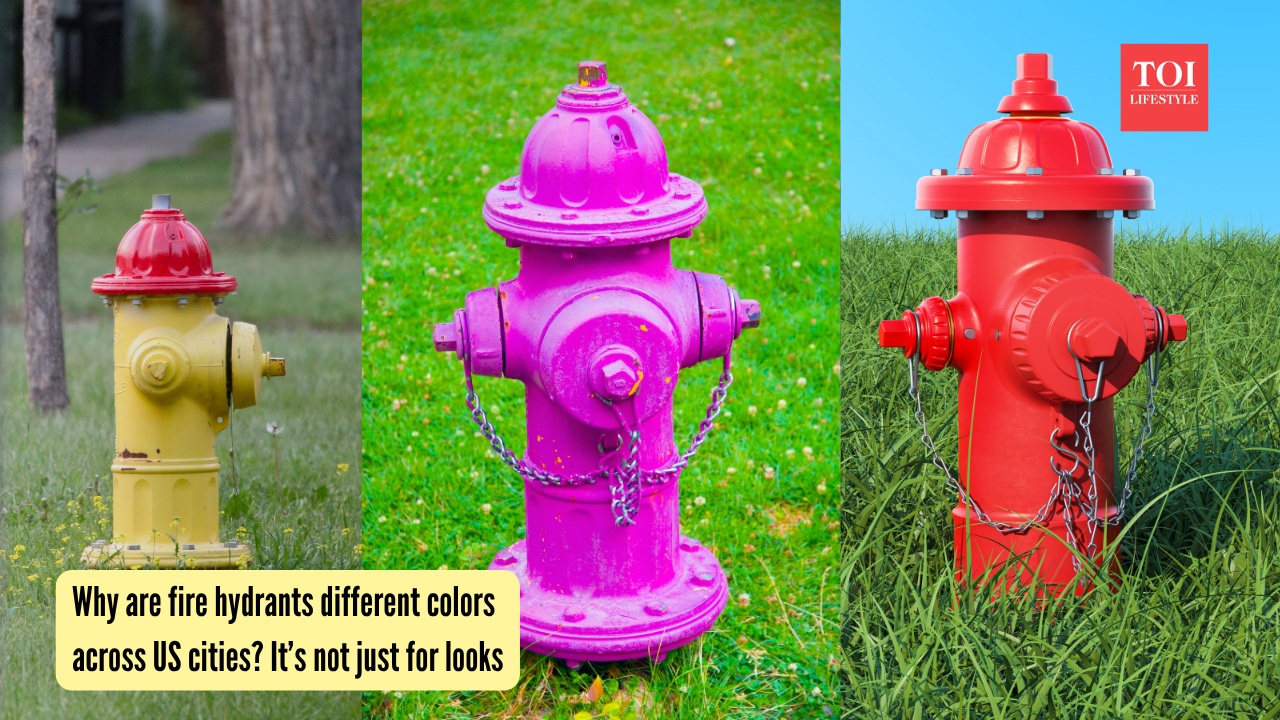
Representative Image (Photo: Canva)
What is a fire hydrant?
A fire hydrant is a connection point to a pressurised water main running below the road. It does not generate pressure or boost flow on its own. Instead, it works as a valve that lets firefighters adjust the pressure accordingly from the existing water network.
There are two types of fire hydrants in the US
In the US, hydrants come in two main types, chosen largely by climate. Wet barrel hydrants are used where freezing is uncommon; they stay full of water at all times, with the control valve sitting above ground, which makes them simpler to maintain and quicker to operate. Dry barrel hydrants suit colder regions: the main valve sits buried below the frost line, so the barrel stays empty until needed. Turning the top operating nut opens a long internal stem that connects down to that underground valve.
What do differently coloured fire hydrants mean?
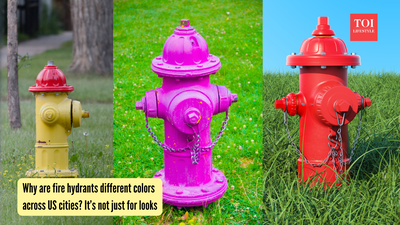
Fire hydrants can also be spotted in numerous colours across cities, but these colours are not random or just for fun. In the US, many hydrants follow National Fire Protection Association (NFPA) 291 guidelines, where the colour is assigned according to the flow capacity: blue for 1,500 GPM or Gallons per minute or more, green for 1,000–1,499, orange for 500–999, and red for under 500. They are also painted in chrome yellow for visibility, and NFPA 291 is a guideline rather than a law, so not every community uses it. Hydrants are also sometimes found in violet colour, according to a variation of local schemes, which usually flags non-potable water, while a black one means it is out of service.
How does a fire hydrant work?
When a hydrant is opened, water travels up from the underground main and out through the hose connections. The important thing to note is that a hydrant is either fully open or fully closed, so it does not throttle the flow.