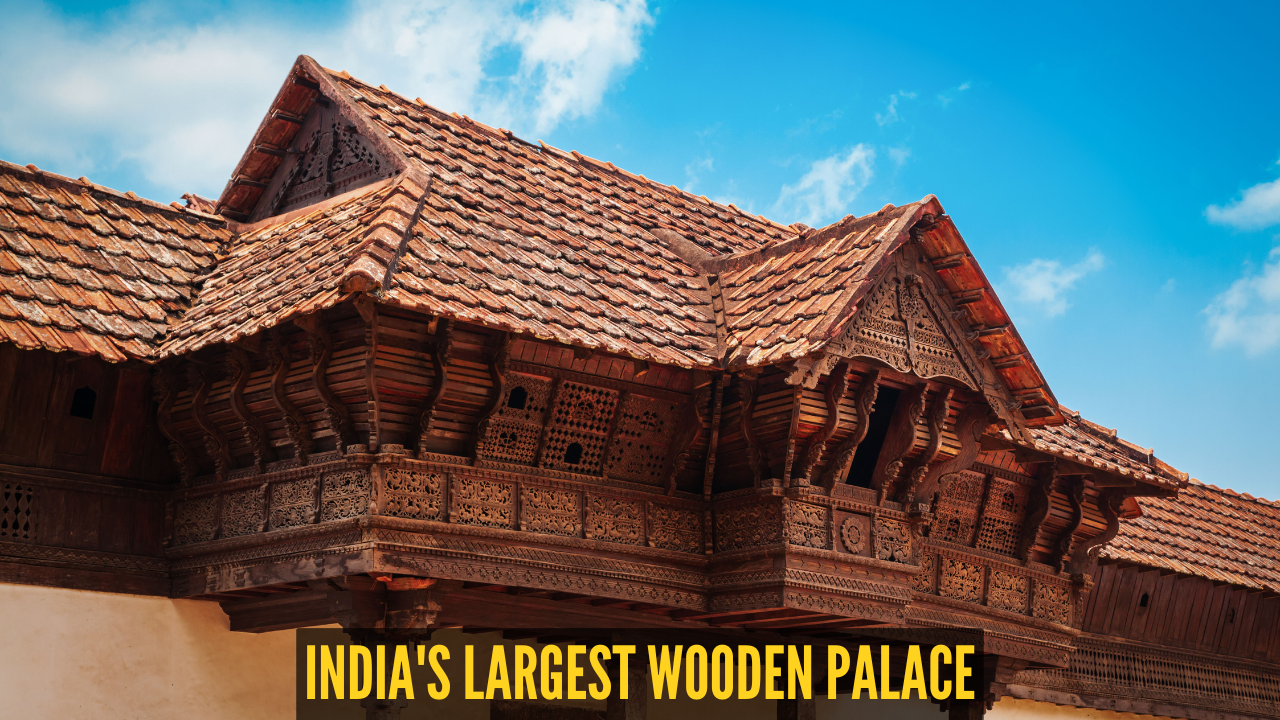
What exactly makes this palace quite so extraordinary? Unlike the rest of India’s grand monuments, you won’t come across the usual imposing stone walls or blinding white marble here. Instead, Padmanabhapuram is an absolute masterclass in timber. It was cleverly engineered well before the advent of modern air conditioning, utilising a rather ingenious design to naturally fend off the intense, cloying heat of the deep south.
Having a wander round the estate feels remarkably like navigating a labyrinth. It’s a vast, sprawling web of interlinked pavilions, open-air courtyards, and lovely, draughty corridors. The sheer attention to detail is staggering wherever you happen to rest your eyes. You’ll easily lose track of time gazing up at ceilings adorned with dozens of distinct floral motifs, ducking through lavishly decorated doorways, and taking in the flawlessly carved rosewood pillars.
Even so, amongst all its architectural eccentricities, those legendary glossy black floors are arguably the biggest puzzle. Centuries have gone by, yet they still maintain a flawless, mirror-like gleam. Historians reckon the original craftsmen concocted a highly bespoke mixture of charcoal, lime, burnt coconut shells, and assorted plant saps to get that exact finish. However, as no one ever bothered to jot down the precise recipe, quite how they managed it remains one of the palace’s most enduring mysteries.
Image Credit: Canva