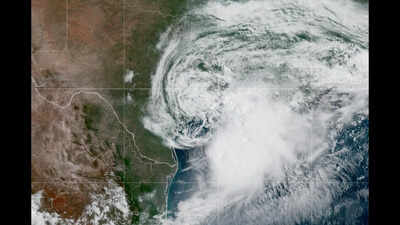
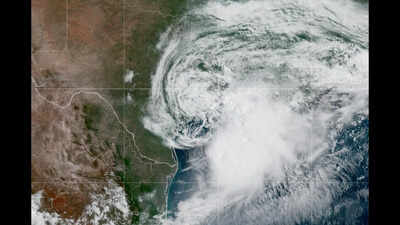
Tropical Storm Arthur, the first named storm of the Atlantic hurricane season, weakened into a low-pressure area on Wednesday night after moving along the upper Texas coast. However, forecasters warned that its remnants could bring days of heavy rain and potentially life-threatening flooding across parts of the southeastern United States.The National Hurricane Center (NHC) in Miami said Arthur was expected to continue weakening as it moved inland through southeastern Texas and western Louisiana before spreading across the Southeast through Friday. The storm’s maximum sustained winds were near 35 mph (55 kph).Although coastal watches and warnings were discontinued on Wednesday night, authorities said flooding remained a significant threat across Texas, Louisiana, Mississippi, Alabama, Georgia and the Florida Panhandle.“Arthur’s main threat will be a prolonged, multi-day heavy rainfall event that could lead to dangerous and potentially life-threatening flash flooding,” said National Hurricane Center Director Michael Brennan.Forecasters said Arthur could dump between 5 and 10 inches of rain across affected areas, with isolated locations receiving as much as 20 inches. The storm could also generate dangerous surf and rip currents along the northwestern Gulf Coast, while tornadoes remain possible through Thursday.Communities across the Gulf Coast spent the day preparing for flooding by clearing drainage systems, removing debris and distributing sandbags. In Louisiana and Mississippi, residents stocked up on supplies as emergency officials positioned boats, barricades and other equipment in flood-prone areas.“We had already received so much rain at our house that we thought it was a good idea to pick up a few bags,” said Luke Barwick, a resident of Covington, Louisiana, after collecting sandbags at a local distribution centre.Parts of Mississippi were already dealing with the effects of heavy rainfall. Officials in Picayune declared a state of emergency after nearly seven inches of rain fell within six hours, overwhelming some areas. The city later distributed thousands of sandbags and placed emergency crews on standby.The storm hovered over coastal Texas on the same day Houston hosted a FIFA World Cup match between Portugal and the Democratic Republic of Congo. The match proceeded as scheduled inside a covered stadium despite the adverse weather conditions outside.Authorities also linked the storm’s heavy rainfall to a drowning incident near Houston. According to the Montgomery County Sheriff’s Office, a 15-year-old boy died after entering a flooded retention pond near a construction site. Officials renewed warnings about the dangers posed by floodwaters.Arthur developed from a disorganised cluster of storms that lingered over the Gulf Coast for several days. While the system weakened quickly after being named, meteorologists stressed that rainfall, rather than wind, remained the primary threat.Forecasters said the storm’s centre was moving northeast from the Texas coast, adding that its precise landfall location was less important because heavy rain had already spread across a wide area of the Gulf Coast and southeastern United States.