Academic performance plays a big role in determining future opportunities for children. Gone are the days when parents used to enroll their children in the nearest possible school. With competition getting sky high, parents are considering every single factor when it comes to choosing a school. Among the factors that determine the choice, the board that the schools follow is one of the most important parts of the discussion. Out of the many established boards, the two that confuse most parents are International Baccalaureate (IB) and the Central Board of Secondary Education (CBSE). If you’re one such parent who is confused between these two, knowing better about the strengths and limitations of each can help make a more informed decision. Here’s how IB and CBSE differ, and what families should keep in mind before choosing the educational path that best suits their child:
23 Jun 2026 | 13:57
What’s the one thing you did that worked for your child’s height growth?
CBSE vs IB: How the two differ
The biggest difference between CBSE and IB lies in how a child learns. When it comes to curriculum, child development coach Hitesh M notes that CBSE focuses more on structured academics and subject knowledge, whereas IB focuses more on inquiry, projects, and applying knowledge to real-world situations. In other words, where CBSE focuses more on academics, IB focuses more on making learning interactive, in an attempt to develop critical thinking in students.
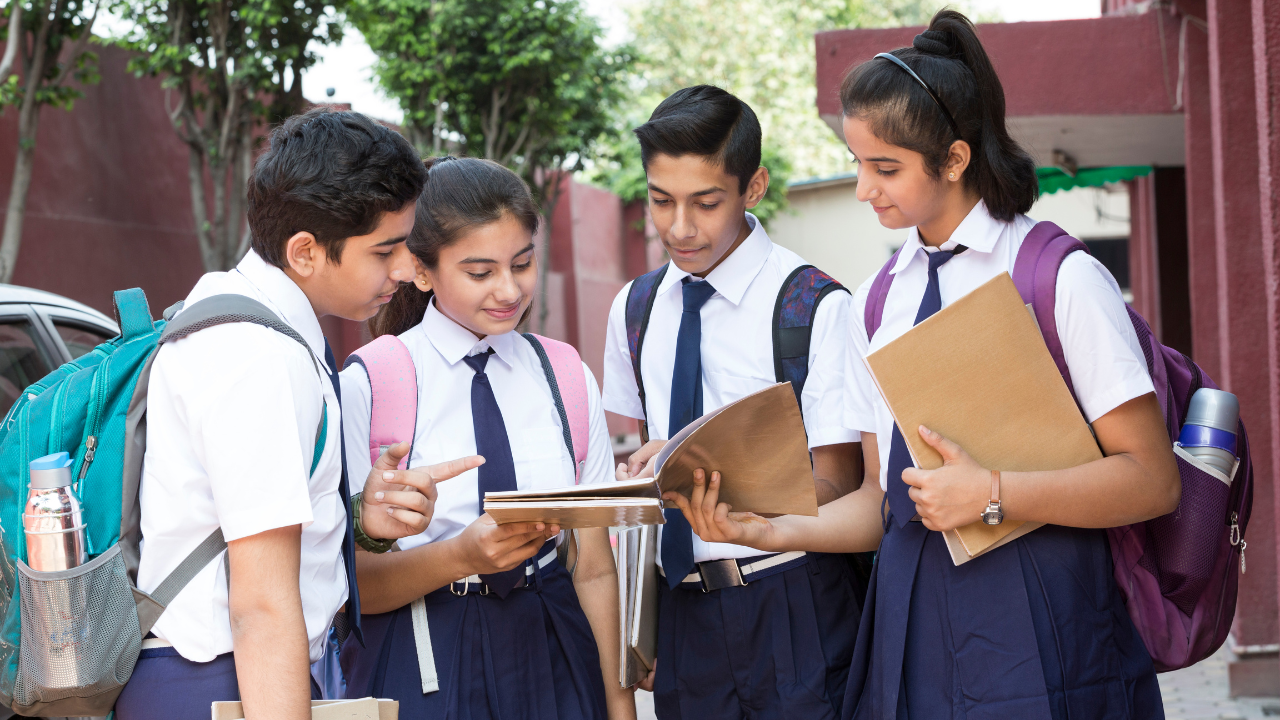
The biggest difference between CBSE and IB lies in how a child learns.
According to Hitesh M, although CBSE has gradually moved towards competency- and application-based learning in recent years, it still largely focuses on helping students arrive at the correct answer. IB, on the other hand, is designed around applying knowledge from the very beginning. Students are encouraged to ask questions, analyse problems from different perspectives, and use what they learn in real-life situations.
How are students assessed in both
One of the biggest differences between the two boards is assessment.“When it comes to exams and assessments, CBSE relies more on written examination, whereas IB uses a mix of exams, projects, presentations, and internal assessments, once again, building on critical thinking,” notes Hitesh.

One of the biggest differences between the two boards is assessment.
CBSE relies largely on written examinations, in IB board, the emphasis is on consistent learning rather than one final examination. This often reduces the dependence on rote memorization. In this aspect, IB can be termed as better.
Availability of CBSE vs IB schools in India
Accessibility is the most practical factor for parents to consider. CBSE schools are widely available across India, from metropolitan cities to smaller towns, making them a convenient option for most families. IB schools, however, are concentrated mainly in larger cities and may not be available in every location. “IB schools are primarily focused in some top cities,” Hitesh notes. In this context, CBSE can be the more practical option for families.
Which board is better for competitive exams in India?
“CBSE curriculum is closely aligned with Indian competitive exams like JEE, NEET, and CUET,” says the child development expert. On the other hand, the IB curriculum is not specifically designed for these exams.

“IB board is designed globally, so the students there have a slight edge,” says child development expert.
“What if my child wants to study abroad in future?”
When it comes to international education, both boards are recognised by universities across the world. However, “IB, of course, is designed globally, so the students there have a slight edge,” says Hitesh. Its emphasis on research, analytical writing, community engagement, and independent learning aligns well with what many overseas universities look for in applicants.
The most important deciding factor for families
When it comes to choosing between the two boards, finances are a major deciding factor for families. CBSE schools are generally more affordable and are available across a wide range of fee structures. In contrast, IB schools typically charge significantly higher tuition fees. Parents should therefore weigh the long-term financial commitment before making a decision.
Which board should parents choose?
There’s no one-size-fit for all answers. According to child development expert Hitesh, the right choice depends on a combination of factors, including a child’s learning style, the family’s educational aspirations, where they live, and what they can comfortably afford.In essence, the most important deciding factor in the early stage of schooling isn’t the board, but the environment- the quality of school, the teachers, the child’s experience etc. The decision can become more clear when the child grows up and understands his needs. Until then, choosing a school with a supportive environment can turn out to be the best choice.