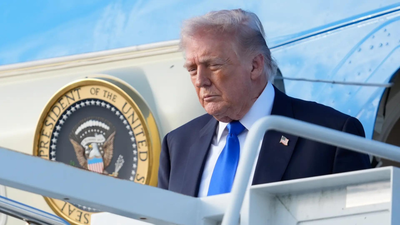
The TOI correspondent from Washington: US President Donald Trump’s increasingly frenetic late-night social media barrages – described by critics as “shitposting” – are becoming a defining feature of his second term, fueling fresh questions about his focus, stamina, and political instincts at a delicate moment for his administration.On Monday night alone, Trump posted or reposted roughly 55 times between 10.15 pm to 1.15 a.m on his Truth Social platform, according to media trackers, touching on everything from accusations that former president Barack Obama attempted a “coup” against him in 2016, to conspiracies about the 2020 election, demands for arrests of political opponents, and a stream of self-congratulatory and self-aggrandizing memes depicting himself on Mount Rushmore and replacing Benjamin Franklin on the $100 bill.The posting spree followed a Mother’s Day weekend dump during which Trump flooded his account with more than 40 messages, none of them related to the holiday. Instead, he fixated on grievances against political enemies, praise from admirers, plans for a lavish White House ballroom, and his controversial proposal to redesign the Lincoln Memorial Reflecting Pool in what he called “American Flag Blue.”The spectacle has deepened unease inside Washington’s political establishment, where even some Republicans privately concede that the President’s online behavior increasingly resembles that of a perpetually aggrieved influencer rather than the commander-in-chief of a country juggling wars abroad, trade tensions with China, and stubborn inflation at home.Trump’s aides reject suggestions that the late-night posting reflects exhaustion or instability, insisting that the President is highly energetic and deeply engaged. White House officials have also pushed back aggressively against viral clips appearing to show Trump briefly dozing off during public events, dismissing them as misleading moments of “blinking” or “resting his eyes.”Still, the images – coupled with Trump’s nocturnal online habits – are feeding a broader narrative about a soon-to-be 80 (June 14) President whose public appearances oscillate between bursts of theatrical aggression and moments of visible fatigue.Late-night comedians, long one of Trump’s favorite foils, have seized on the contradictions, with Jimmy Kimmel joking about “how long you have to be on the toilet to post that much,” while Seth Meyers has repeatedly lampooned Trump’s fixation on cognitive tests and self-promotion. Another wag quipped that Trump’s Truth Social feed resembles “your uncle discovering energy drinks and conspiracy podcasts at the same time.” The jokes are landing at an awkward political moment for Trump. Recent polling has shown erosion in public confidence on the economy, particularly over affordability and gasoline prices — issues that helped power his return to office. Even within the MAGA movement, there is visible frustration that kitchen-table concerns are increasingly competing for attention with Trump’s personal obsessions, online feuds, and vendettas against perceived enemies.Conservative commentators who once celebrated Trump’s social media dominance are beginning to sound uneasy. Some pro-Trump influencers have quietly warned that endless reposting of election conspiracies and AI-generated imagery risks making the administration appear distracted and unserious ahead of Trump’s upcoming high-stakes visit to China, where he is expected to confront tense negotiations over tariffs, technology restrictions, and military competition in the Pacific.Diplomats and foreign policy analysts say the contrast is becoming increasingly stark: while Beijing projects disciplined, tightly controlled statecraft under President Xi Jinping, Washington often appears consumed by Trump’s personal stream of consciousness. That impression has been amplified by reports that the President has shown diminishing interest in ongoing conflicts overseas, even as he remains focused on symbolic domestic projects such as the White House ballroom renovation and cosmetic redesigns around the National Mall. Critics say the President appears more animated discussing architectural aesthetics and civic works than military briefings.Trump’s supporters argue that the criticism misses the point: the President’s relentless posting demonstrates authenticity, direct communication, and refusal to submit to establishment norms. But detractors see something else: a presidency increasingly consumed by grievance, spectacle, and performance art.For now, the White House insists Trump remains fully in command. Yet in Washington — where perception often hardens into political reality — the image of an aging President posting dozens of conspiratorial messages deep into the night while aides explain away apparent public drowsiness is becoming difficult to ignore. And with the China trip looming, allies and adversaries alike will be watching closely to see whether Trump arrives as a disciplined leader of a superpower — or as the internet’s most powerful insomniac and a provocative troll.